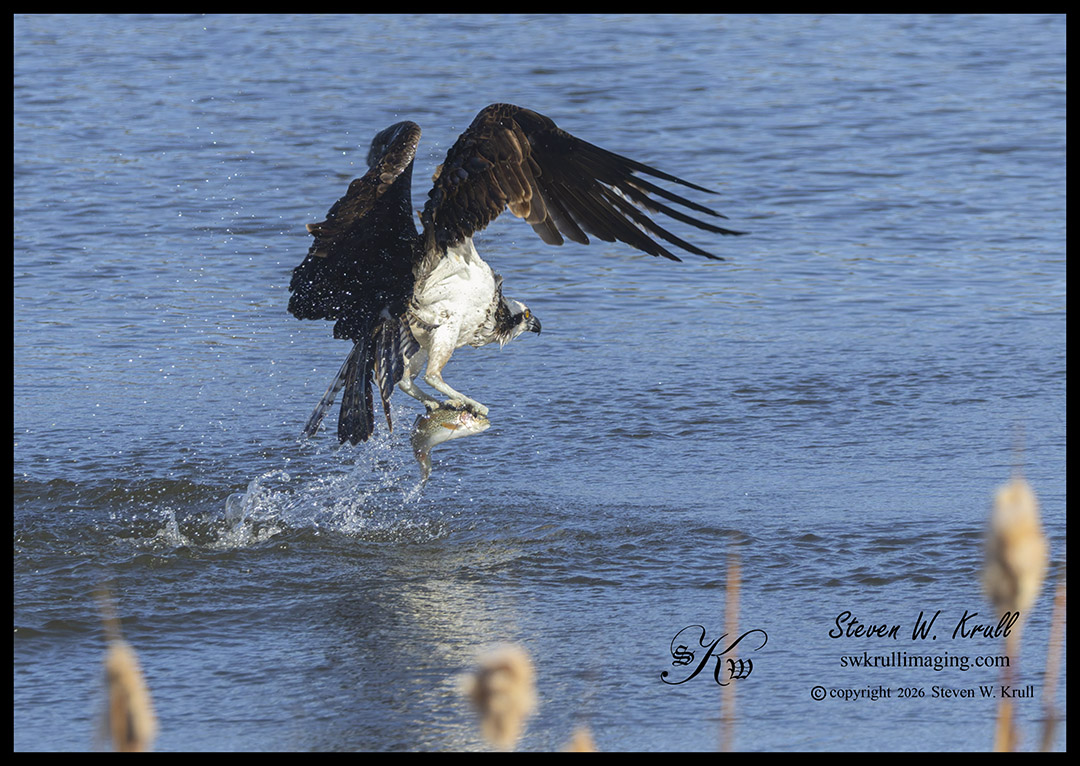


The purpose of this article is to clear up myths and misinformation about image exposure ISO, and noise. So, what is exposure exactly? Exposure is simply the amount of light reaching your sensor or film in a given amount of time. The amount of light reaching your sensor is determined by the length of time the camera’s shutter is open, and the size of the opening in your selected lens model.
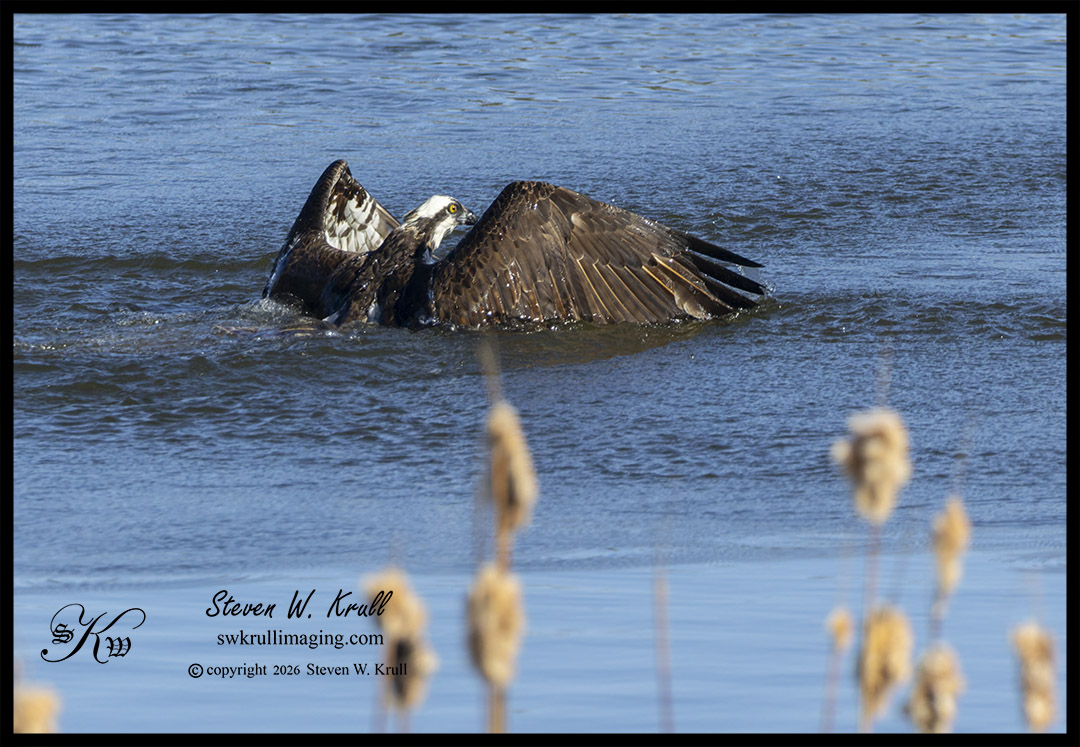
An underexposed image is one that has not received enough light to create a good image, while an overexposed image is one that has received too much light while the shutter is open. You might hear some photographers speak of a concept called the “exposure triangle”. The exposure triangle is a fundamental photography concept balancing three key elements, aperture, shutter speed, and ISO, to determine an image’s brightness and creative style.
Aperture relates to the radius of the lens opening, shutter speed is of course the length of time the sensor is exposed to light, and ISO (International Organization for Standardization) is the sensitivity of the film or sensor to light. A higher ISO value indicates more sensitivity to light, thus allowing for a faster shutter speed or better exposure in low light while maintaining a usable shutter speed. This concept is especially important in film photography, because the sensitivity of the film stock can’t be changed once the camera is loaded with film.
For example, a photographer who is planning to photograph a baseball game might want to load a “fast” film of ISO 400, while a portrait photographer might choose a slower more fine grained film such as ISO 100. Modern film cameras automatically detect the film speed encoded into the stock, and that value is set for the duration of that roll of film. Digital cameras have an adjustable ISO which can be set to any speed you like, and the camera will adjust the exposure to compensate for the ISO speed you have selected.
Here’s where the story gets a bit muddled, while film stocks can be purchased with varying light sensitivities, your digital camera’s sensor cannot be adjusted. It is simply a silicon device that collects light, and there is no assigned ISO value associated with it. Think of it like your car’s stereo system, a piece of equipment that receives a signal from the airwaves. It is up to you to decide how much gain to apply, by adjusting the volume knob. Turning the volume knob doesn’t increase the signal from the airwaves, it simply amplifies it to match your listening preference.
In digital photography, if your image is too dark on the display for you to see clearly, you can turn up the ISO value until it looks good on the screen. Turning up the ISO doesn’t increase the amount of light reaching the sensor, it simply amplifies it to fit your viewing preference akin to the volume of sound from your stereo system.
So in digital photography, there is actually no longer an “exposure triangle.” Your exposure is determined by two factors, the shutter speed and the aperture, or f/stop as you have probably heard it called. The f/stop is actually a complex formula involving the radius of the lens opening, but for this article, we will just think of it as the amount the lens opens during the exposure. The f/stop values become smaller as the lens opening is increased, and larger when it is decreased. For example, f/2.8 is a large opening, while f/16 might be considered a small opening.
Many assume that using high ISO value to create a brighter image causes noise. This misunderstanding is one of the biggest myths in modern photography, and a source of unnecessary consternation and dissatisfaction with less expensive camera models with small sensors, and lenses with smaller maximum aperture openings.
When your car antenna or phone for that matter is receiving a weak signal, you experience noise in the form of hissing or cutting out. Turning up the volume doesn’t increase the static, but it does make it more noticeable. Similarly with a camera sensor, a low light signal causes noise. Adjusting the ISO to a higher value doesn’t increase the noise, the noise is already there from the weak light signal. A high ISO value might make the noise appear more obvious, but it is not causing the noise.
If you want to reduce noise in your image, you have to increase the light signal reaching the sensor. To increase the light signal you must adjust your camera to capture more light. That means using a longer shutter speed, or using a larger aperture in your lens. Opening your lens one stop, or slowing your shutter down one stop, doubles the amount of light available to your camera’s sensor.
However here’s where it gets tricky, for example if you are shooting wildlife at dawn you might not be able to use a slower shutter speed. Wildlife photography usually involves a telephoto lens, which requires a faster shutter speed to avoid camera shake. Your lens can only open to it’s maximum aperture, and if that’s not enough for a sufficient exposure, you are stuck with the noise. You can turn up the ISO so that you can see the image better on your LCD, but the light reaching your sensor is determined by the shutter and aperture values. If the wildlife isn’t moving, a tripod might facilitate using a slower shutter speed, but a moving animal might be blurry no matter how still you hold the camera. Landscape photographers however, can use a tripod and successfully slow down their shutter speed. Their mountain isn’t going anywhere during the one or two seconds a correct exposure might require.
Since I know that the ISO value has nothing to do with the noise, I just set it to auto so that I can see a bright view what I’m capturing. I simply use ISO as a reference to indicate the effectiveness of my shutter and aperture. I know the ISO itself isn’t going to affect my noise and if I see that the ISO value is high, I might consider opening up my lens or using a slower shutter speed to get more light into my exposure. But if the conditions don’t allow me to capture a stronger light signal, I’m stuck with whatever ISO value is required for me to view the results on my LCD.
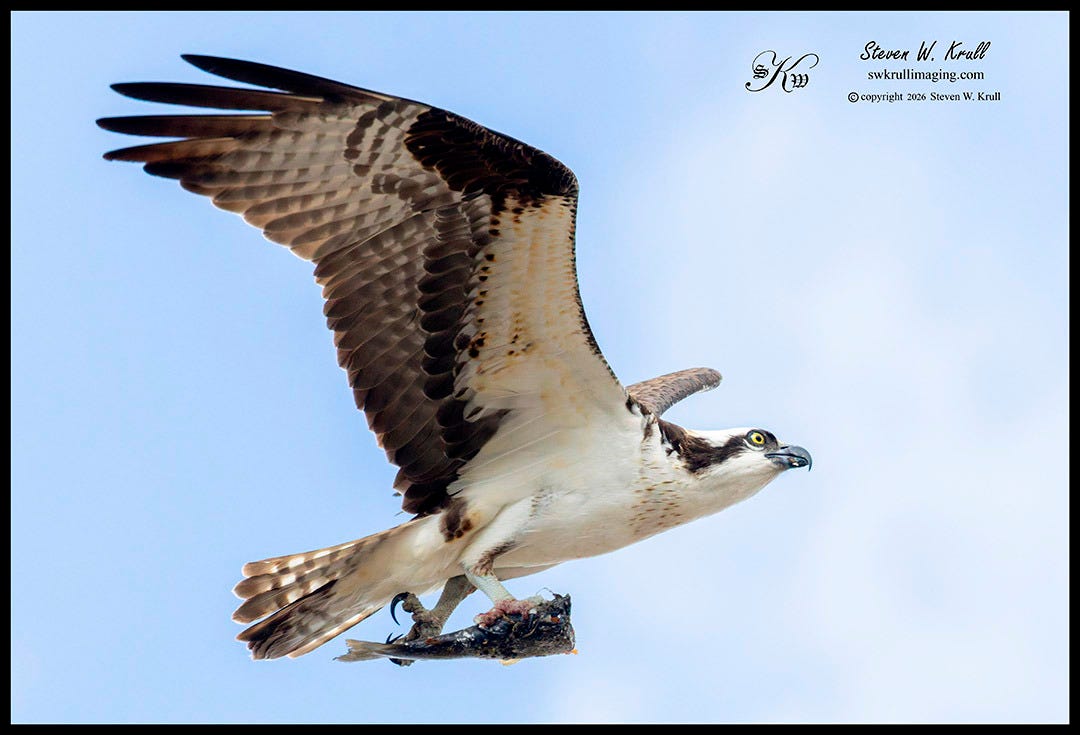
I personally do most of my wildlife shooting with a Canon R7, which many say has too much noise in low light. I actuality, many people using this camera model are simply underexposing their images. I regularly produce beautiful images with this camera using ISO values of 6400 or higher. In fact here is beautiful image of an osprey that I captured early in the morning at ISO 3200.
In addition, advances in modern noise reduction software have almost made digital noise irrelevant. As long as you have a well exposed reasonable sharp image, noise can be easily reduced or even eliminated. I happen to use DXO Pure Raw to decode the raw images from my R7, and rarely encounter an exposure that is unusable. So my advice is to quit worrying about noise, or if your camera is considered too noisy by the YouTube pundits. I follow the R7 forums, and continually see so called experts telling people that have just invested in the R7 that their camera is unusable, to which I say nonsense. Just use what you have learned about light in this article, and shoot with whatever camera you have with you at the moment!
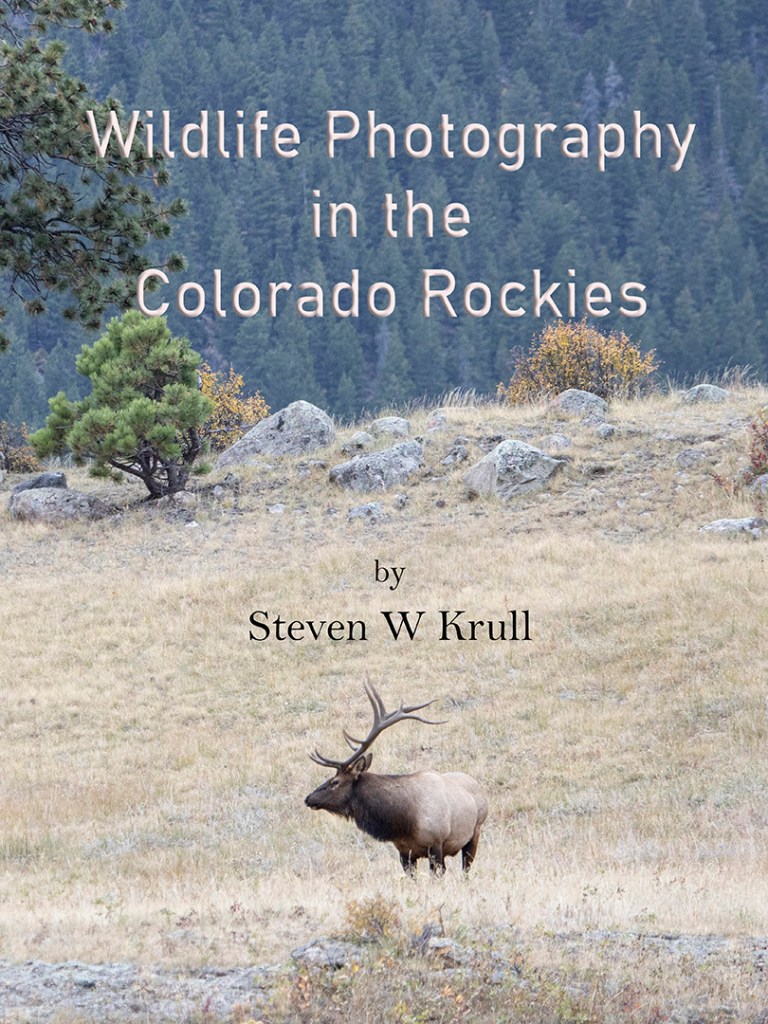
If you would like to learn where to find our magnificent Colorado wildlife, and how to capture beautiful pictures for yourself, please consider a purchase of my book, Wildlife Photography in the Colorado Rockies. This full size publication is just one of several books I have published, and is filled with dozens of full color glossy pictures of Colorado wildlife, along with valuable tips and tricks for tracking and photographing them! Your purchases of course are a great way to support this site and my work helping to preserve our wild heritage and public forest lands.
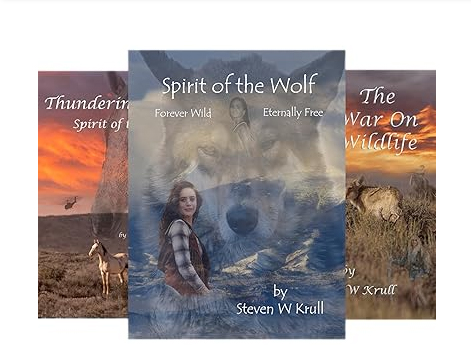
Krull has recently completed his War on Wildlife trilogy, which includes three historical fiction adventure novels. The entire series can be purchased as a set, or as individual installments. The saga begins in California as a fashion photographer learns about the famous matriach of a Yellowstone wolf pack. The saga continues as the main characters explore the American west while facing tragedy, and triumph and many exciting adventures along the way. Readers will learn about the famous Yellowstone wolf known as 06 for the year she was born, the exploits of a famous wild Colorado mustang stallion named Picasso, and finally about Colorado’s first wild wolf pack since their extinction in the early 20th century.
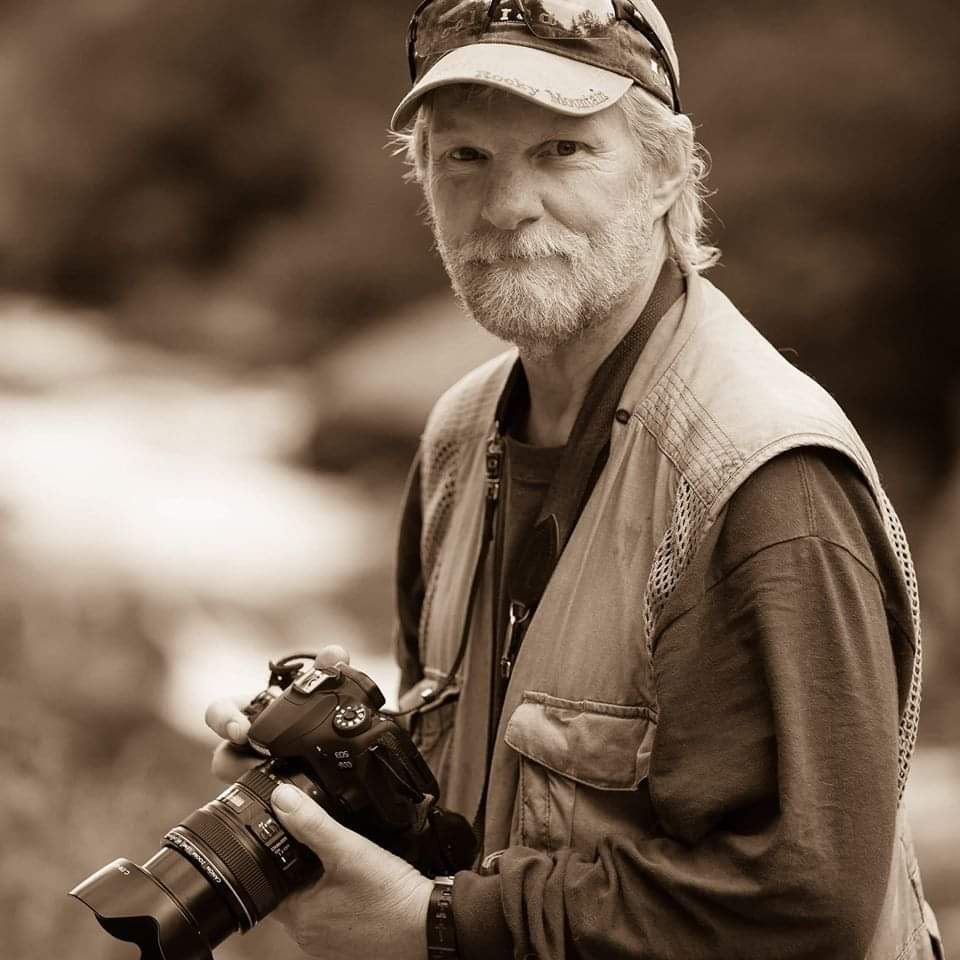
Steven W. Krull is a renowned photographer and author who has been photographing and writing of the beauty and wildlife of the Colorado Rocky Mountains for over two decades. Please visit his website at S.W. Krull Imaging to view his work, including thousands of prints for sale, stock images for commercial use, and his library of published books.
Discover more from Colorado Nature Photographer / Author | Steven W. Krull
Subscribe to get the latest posts sent to your email.

